
For years, OpenCorporates was one of the first stops for checking basic company registration details across different countries. However, tighter free lookup limits, rising commercial API fees, and update delays in certain jurisdictions have pushed many compliance, sales, and research teams to look for an OpenCorporates alternative that better fits their budget and workflow.
In this guide, you will learn why teams switch away from OpenCorporates, how the three main types of alternatives compare, and which specific platforms or data pipelines fit different business goals. We will also walk through practical steps for cleaning and verifying company records across multiple registries—and show how to collect public registry pages reliably at scale.
Why Look for an OpenCorporates Alternative?
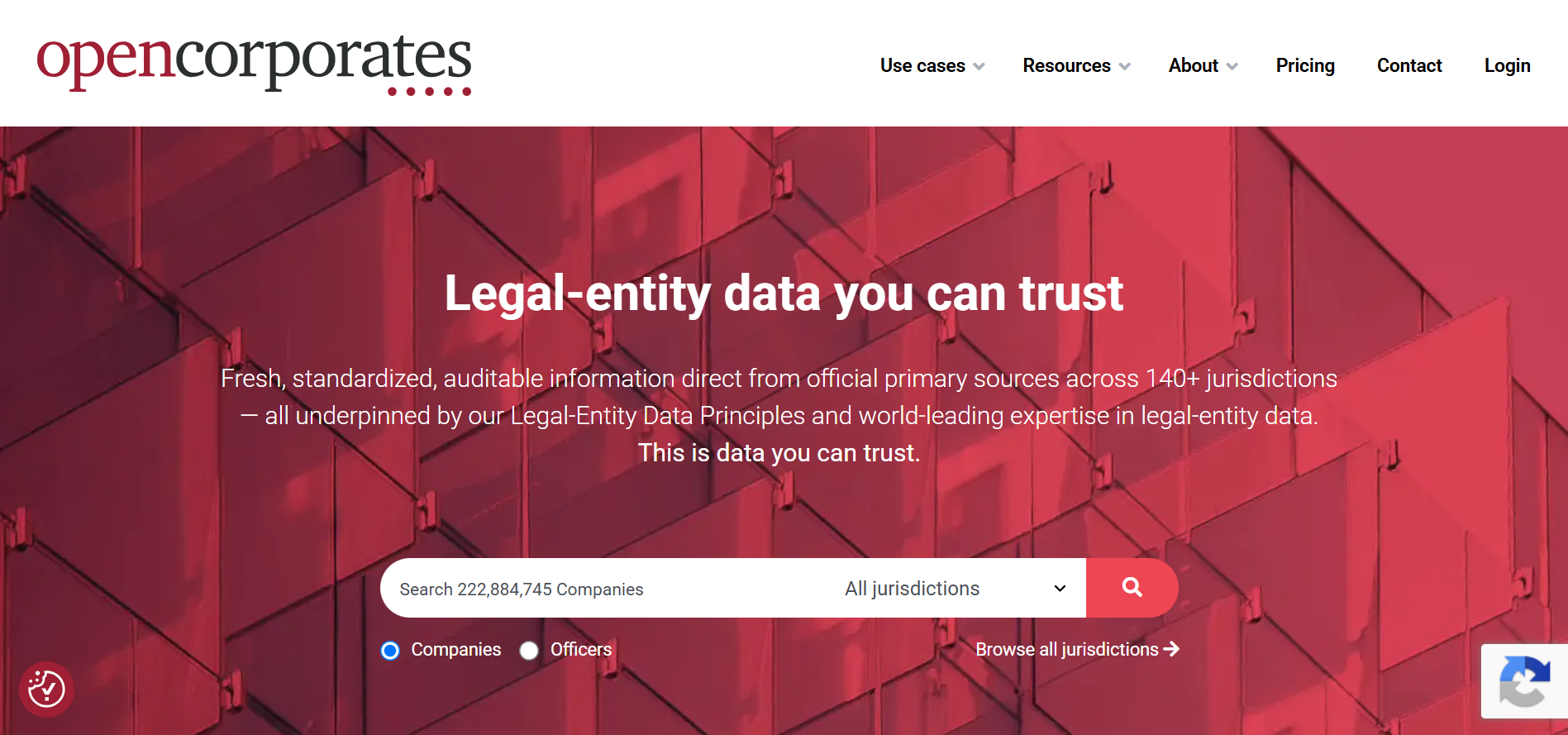
Before comparing individual tools, it helps to pinpoint what usually prompts a team to replace or supplement OpenCorporates. Depending on how you use business entity data, three common roadblocks tend to show up quickly:
- Higher Costs and Strict Usage Caps: While occasional manual searches on the public website remain useful, connecting an automated workflow to the commercial API requires an enterprise license. For growing startups or research teams running thousands of daily checks, API pricing and rate caps often exceed early budgets.
- Lagging Updates in Specific Jurisdictions: Because OpenCorporates aggregates records from hundreds of regional government sources, updates do not always appear the same day a company files a change. Teams doing time-sensitive onboarding or legal checks often need direct access to the latest state or national filings.
- Limited Commercial Context Beyond Legal Filings: Official registration records confirm whether a business exists, when it was incorporated, and who its registered agent is—but they rarely include employee headcount, revenue estimates, funding rounds, or direct contact details needed by B2B sales teams.
What Are the Main Types of OpenCorporates Alternatives?
Before evaluating individual tools, it helps to group your options by how the data is sourced and delivered. Almost every OpenCorporates alternative falls into one of three models, each balancing cost, data freshness, and technical effort differently.
Official Government Business Registries (Free Direct Sources)
National and state governments maintain the primary legal records for every registered corporation, limited liability company, and partnership within their borders. Portals such as the U.S. Securities and Exchange Commission’s EDGAR system, individual U.S. Secretary of State databases, and the UK’s Companies House allow the public to verify official entity names, registration numbers, filing dates, and active status directly at the source. These portals are authoritative and free to search, though each jurisdiction uses its own website layout and search rules.
Commercial Company Data Platforms and APIs
Commercial business intelligence providers aggregate official filings and enrich them with extra layers such as corporate ownership trees, credit risk scores, funding history, and employee estimates. Platforms like Dun & Bradstreet, Moody’s Orbis, Crunchbase, and Sayari deliver clean, standardized records through unified dashboards and REST APIs. They save engineering time for teams that need ready-to-use global coverage, though enterprise subscriptions typically carry higher annual commitments.
Custom Web Scraping from Public Registries
When a workflow requires checking thousands of companies across specific states or countries without paying enterprise API fees, teams often build automated pipelines to collect public directory pages directly. Much like crawling public business directories for market research, custom scrapers visit official registry search results and extract only the publicly listed entity fields into a structured spreadsheet or database. This approach offers full control over refresh schedules while keeping ongoing data costs predictable.
Which OpenCorporates Alternative Fits Your Use Case?
Once you know which data model fits your budget, comparing specific providers becomes much easier. The table below gives a quick overview, followed by a closer look at each option’s strengths, trade-offs, and official website.
| Alternative | Data Type | Coverage | Cost Model |
| UK Companies House | Official government registry | United Kingdom | Free web search and REST API |
| SEC EDGAR | Official regulatory filings | U.S. public companies | Free web search and JSON API |
| Dun & Bradstreet | Commercial credit & entity data | Global business database | Tiered commercial plans |
| Sayari | Commercial risk intelligence | Global corporate & trade records | Enterprise subscription |
| ZoomInfo | B2B contact & firmographic intelligence | Global commercial companies | Seat- and credit-based plans |
| Crunchbase | Commercial startup & funding data | Global tech and private firms | Freemium to paid tiers |
| Custom Registry Scraping | Direct public registry extraction | Any public registry portal | Infrastructure and proxy usage |
1. UK Companies House — Official UK Company Registry
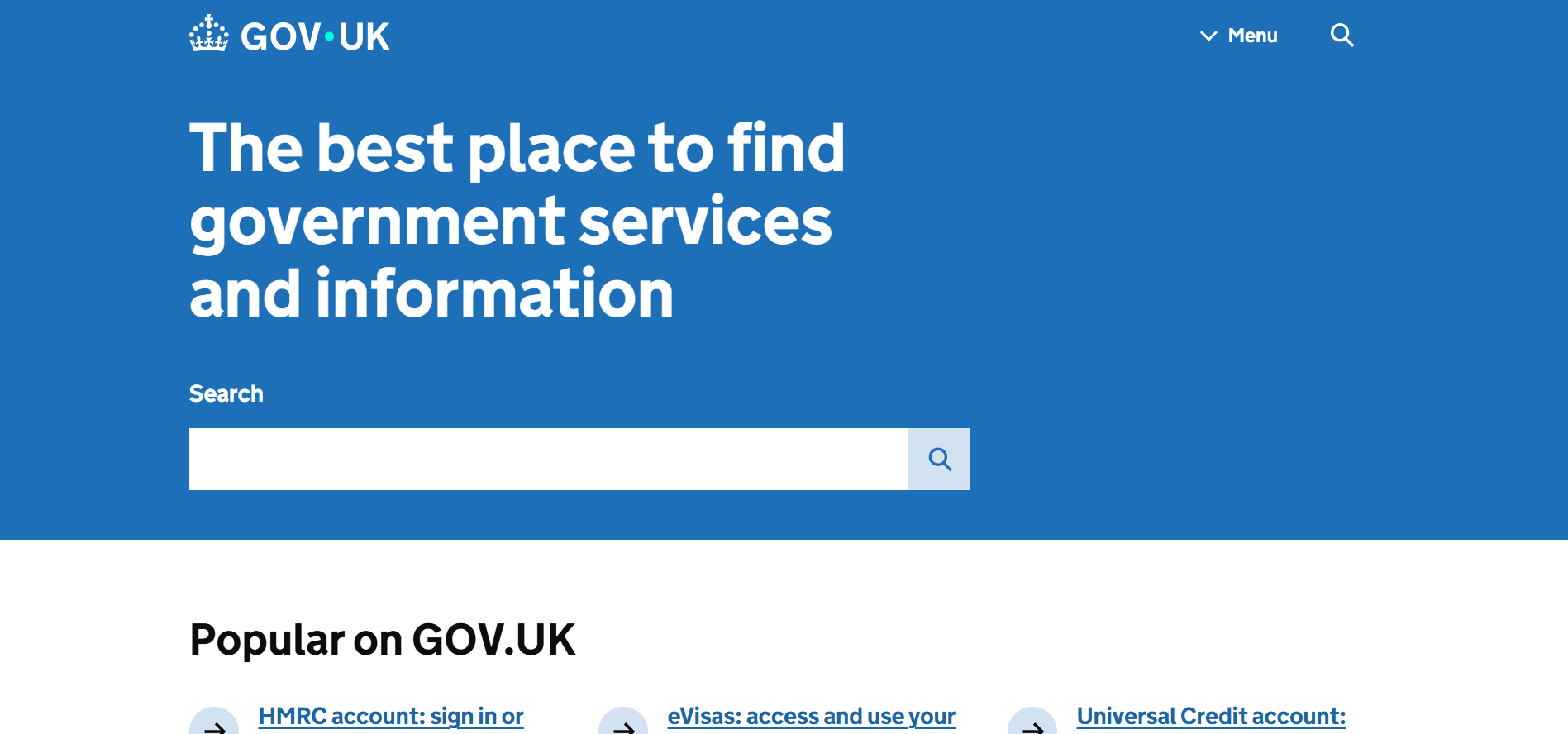
UK Companies House is the official government registrar for businesses incorporated in England, Wales, Scotland, and Northern Ireland. It provides primary legal records—including incorporation dates, registered office addresses, filing histories, and active directors—for direct entity verification.
Depending on workflow volume, teams can search records through the public web interface or automate lookups using the free Companies House API. Rate limits and API key registration rules should be confirmed in the official developer documentation.
Key advantages
- Free access to official government company records and REST API endpoints.
- Direct, primary-source data on UK directors, filing histories, and legal status.
- High reliability for UK compliance and Know Your Business (KYB) checks.
Limitations
- Coverage is restricted strictly to UK-registered entities, requiring separate sources for U.S. or international companies.
Best for: Compliance, legal, and research teams that need direct, free verification of UK-registered businesses.
Official website: https://www.gov.uk/government/organisations/companies-house
2. SEC EDGAR — Official U.S. Public Company Filings
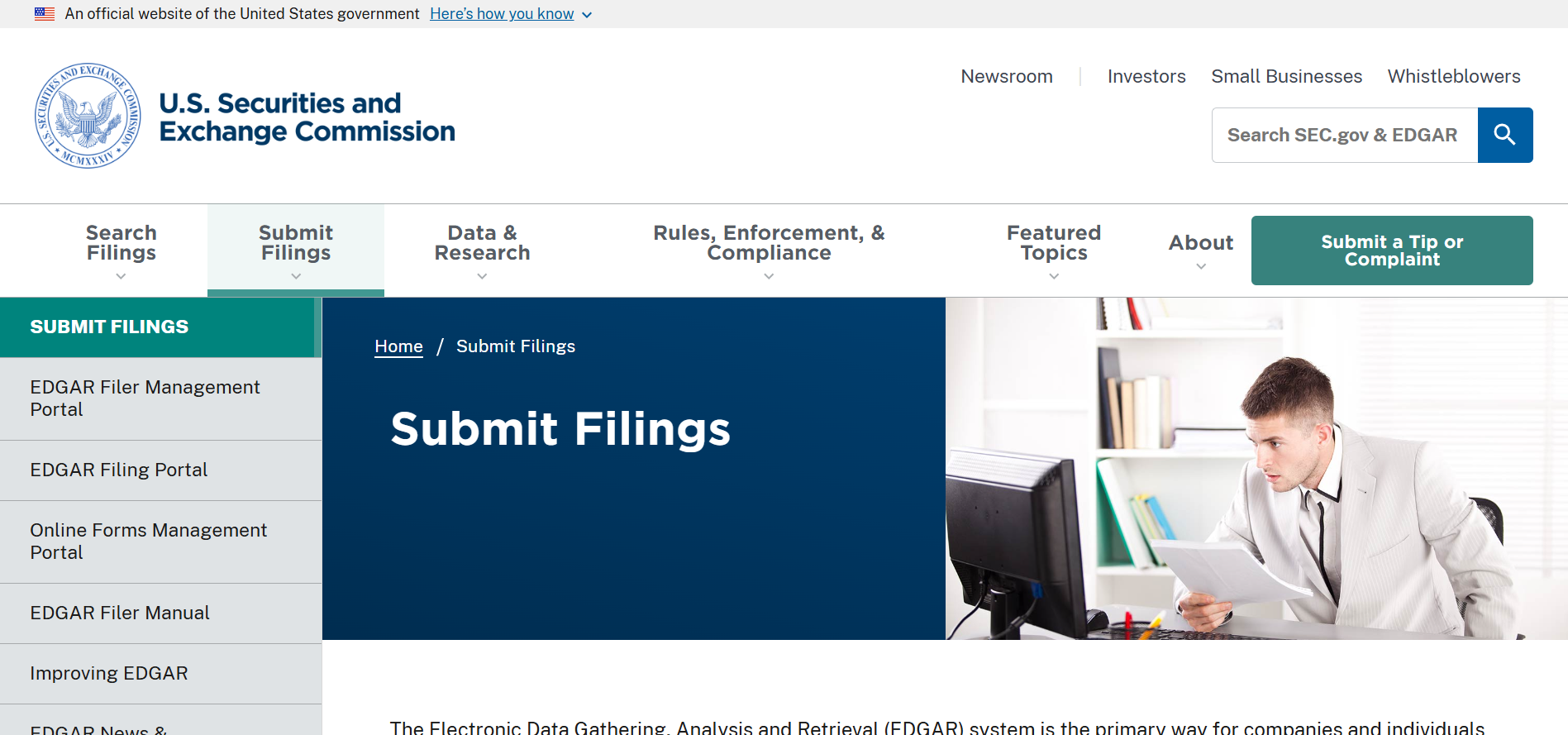
SEC EDGAR is the official electronic filing system maintained by the U.S. Securities and Exchange Commission. It houses regulatory disclosures, financial statements, ownership reports, and Central Index Key (CIK) records for publicly traded companies in the United States.
Analysts and developers can browse filings online or retrieve structured JSON submission histories through the SEC EDGAR API. Automated scripts must follow SEC fair-access guidelines, including declaring a descriptive User-Agent header and respecting request rate limits.
Key advantages
- Authoritative, free financial and corporate disclosure filings directly from the U.S. regulator.
- Structured JSON endpoints and CIK identifiers suited for automated financial tracking.
- No commercial subscription required for public filing access.
Limitations
- Covers only publicly traded and regulated filers, excluding private LLCs and small businesses registered at the U.S. state level.
Best for: Financial analysts, investors, and researchers tracking U.S. public companies and regulatory filings.
Official website: https://www.sec.gov/edgar
3. Dun & Bradstreet — Commercial Business Credit and Entity Data
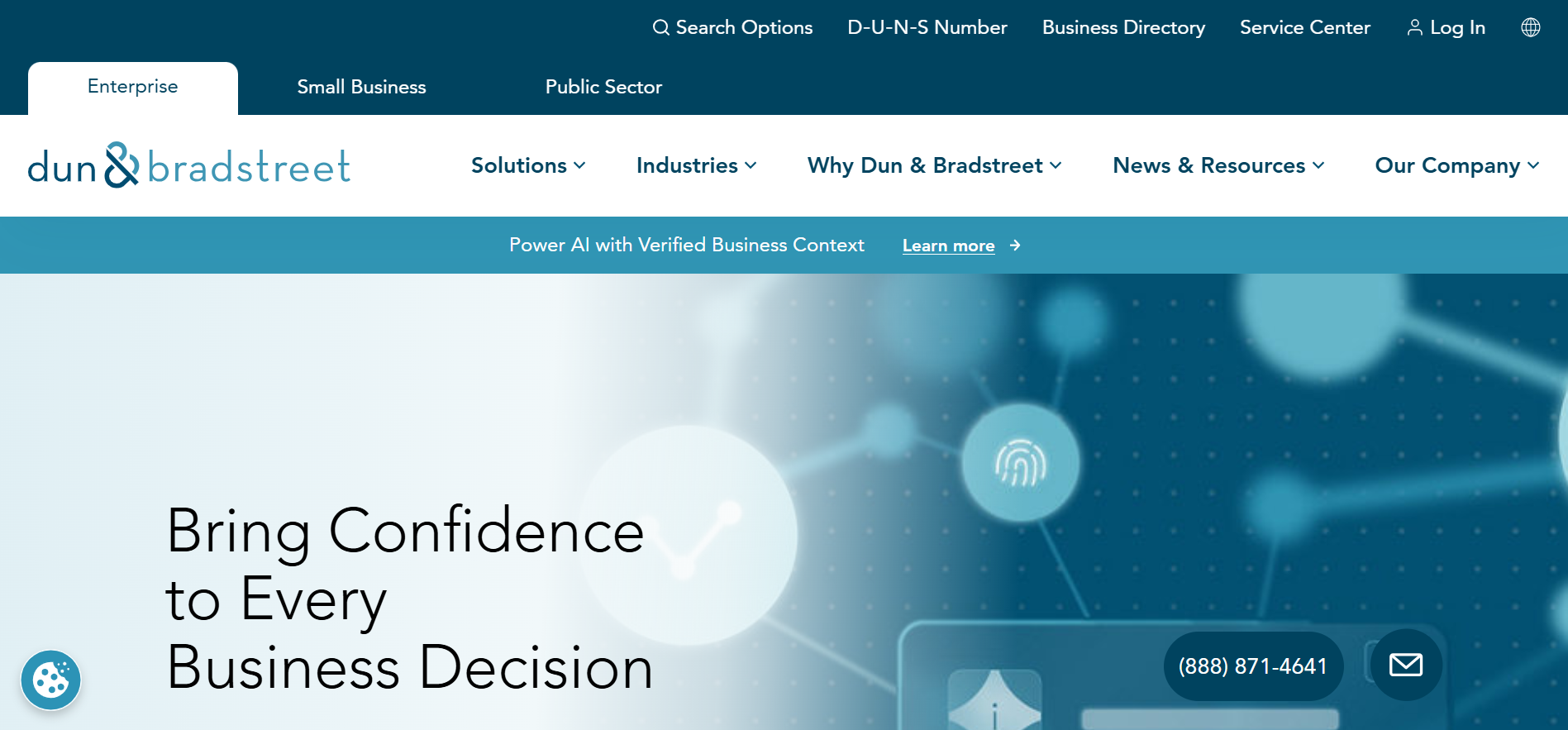
Dun & Bradstreet (D&B) provides commercial business intelligence, corporate linkage trees, and credit risk evaluations across global markets. Its proprietary D-U-N-S Number system is widely used in enterprise procurement, supply chain vetting, and vendor onboarding workflows.
Depending on the selected product tier, businesses can query standardized entity profiles, parent-subsidiary hierarchies, and payment risk indicators via web portals or enterprise APIs. Exact field coverage, API quotas, and licensing terms should be confirmed directly with the provider.
Key advantages
- Broad international company coverage anchored by the standardized D-U-N-S identifier.
- Detailed corporate family hierarchies and commercial credit risk indicators.
- Built for enterprise vendor onboarding and procurement compliance workflows.
Limitations
- Enterprise pricing, custom contracts, and sales onboarding make it costly for smaller teams or occasional lookups.
Best for: Enterprise procurement, finance, and risk teams needing global corporate hierarchies and credit intelligence.
Official website: https://www.dnb.com/
4. Sayari — Cross-Border Corporate and Risk Intelligence

Sayari focuses on corporate transparency, global trade data, and beneficial ownership graphs compiled from official registries, customs records, and public filings worldwide. It is built for tracing complex cross-border entity relationships rather than simple marketing list building.
Depending on organizational requirements, compliance and investigative teams use Sayari to screen counterparties, uncover hidden ownership links, and monitor sanctions exposure across multiple jurisdictions. Specific jurisdiction depth and API entitlements should be verified with the provider.
Key advantages
- Strong cross-border entity resolution linking corporate registries with trade and customs records.
- Purpose-built for deep KYB, anti-money laundering (AML), and supply chain risk investigations.
- Multi-jurisdiction search within a single investigative workspace.
Limitations
- Institutional pricing and compliance-heavy capabilities go beyond what general sales or basic lookup teams require.
Best for: Financial crime, compliance, and risk teams conducting cross-border ownership and counterparty due diligence.
Official website: https://sayari.com/
Master proxy setup, integration and performance optimization quickly with IPFLY guides
5. ZoomInfo — B2B Company and Contact Intelligence
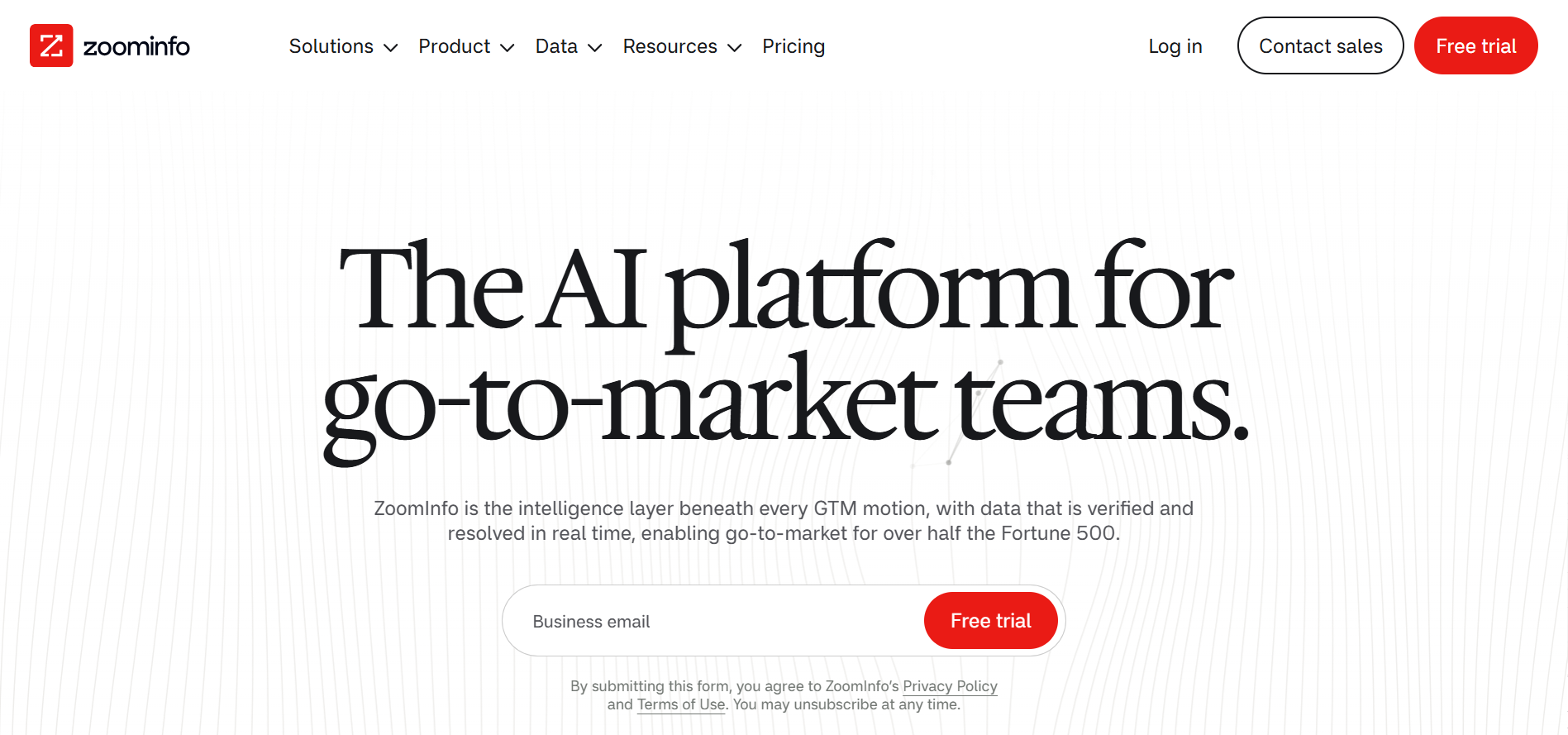
ZoomInfo focuses on B2B sales intelligence, company information, professional contacts, and sales and marketing workflows. It is more relevant when the goal is to identify potential customers and decision-makers than when the primary requirement is retrieving official registration records.
Depending on the selected product and plan, businesses can use company and contact information in prospecting, enrichment, and sales workflows. API availability, integrations, and data entitlements should be confirmed with the provider.
Key advantages
- Designed for B2B prospecting and sales intelligence.
- Company and professional contact information.
- Integration options for sales and marketing operations.
Limitations
- Commercial access and pricing can depend on the selected package, contract, and required capabilities. Contact intelligence is also a different data category from official legal-entity records.
Best for: Sales and marketing teams that need to identify companies, reach decision-makers, and enrich prospect records.
Official website: https://www.zoominfo.com/
6. Crunchbase — Startup, Funding, and Growth Intelligence
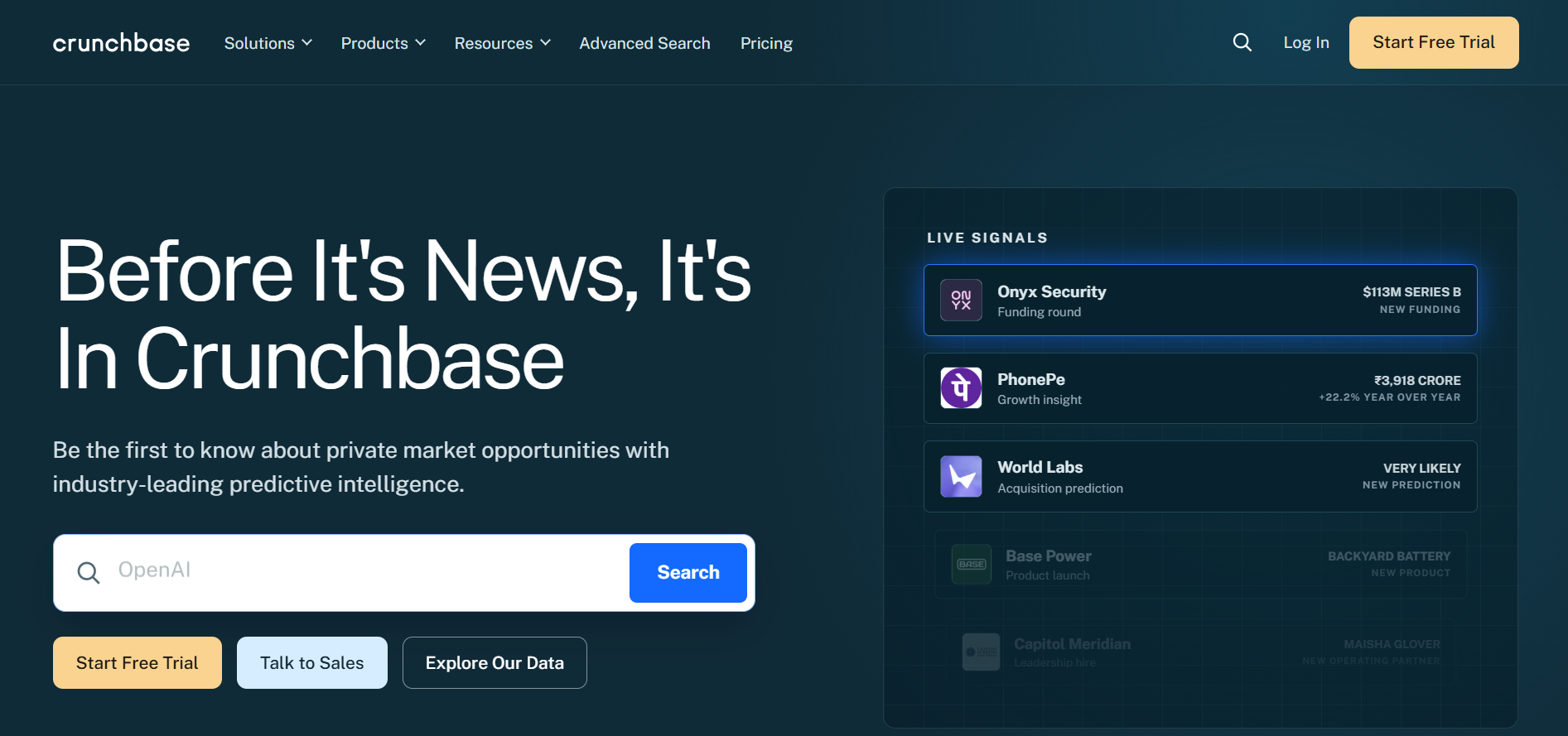
Crunchbase tracks private-company market activity, including venture funding rounds, investor profiles, acquisitions, and leadership changes. It is most useful when teams want commercial growth signals and sector trends rather than statutory incorporation filings.
Depending on the chosen subscription tier, users can filter companies by funding stage, industry, or headquarters and export records or connect via API. Data completeness for non-venture businesses and exact API limits should be confirmed on the provider’s plan page.
Key advantages
- Rich visibility into startup funding rounds, investors, and market momentum.
- Intuitive search filters for market research, partnerships, and venture scouting.
- Accessible entry tiers compared to traditional enterprise credit bureaus.
Limitations
- Lighter coverage for traditional offline small businesses and cannot serve as official legal proof of incorporation.
Best for: Venture analysts, business development teams, and marketers tracking high-growth private and tech companies.
Official website: https://www.crunchbase.com/
7. Custom Registry Scraping — Direct Public Portal Extraction
Custom registry scraping collects publicly listed company records directly from national or state business portals—such as U.S. Secretary of State databases—when teams need fresh local filings at scale without per-record commercial API markups.
Depending on technical resources, teams can build automated scripts or pair no-code scraping tools with region-matched connections to extract entity names, filing dates, and active statuses into structured spreadsheets. Pipelines must respect each portal’s robots.txt rules, request limits, and public terms of service.
Key advantages
- Direct access to fresh state-level and regional registry updates without commercial API markups.
- Full control over target jurisdictions, custom fields, and refresh schedules.
- Scales predictably for high-volume directory checks across multiple regions.
Limitations
- Requires ongoing parser maintenance when government websites update their page layouts and careful management of request rates across regional portals.
Best for: Data engineering, operations, and research teams needing high-volume or localized business registry records across specific states or countries.
Official website: Varies by target state or national business registry portal
How to Clean and Verify Multi-Source Company Data?
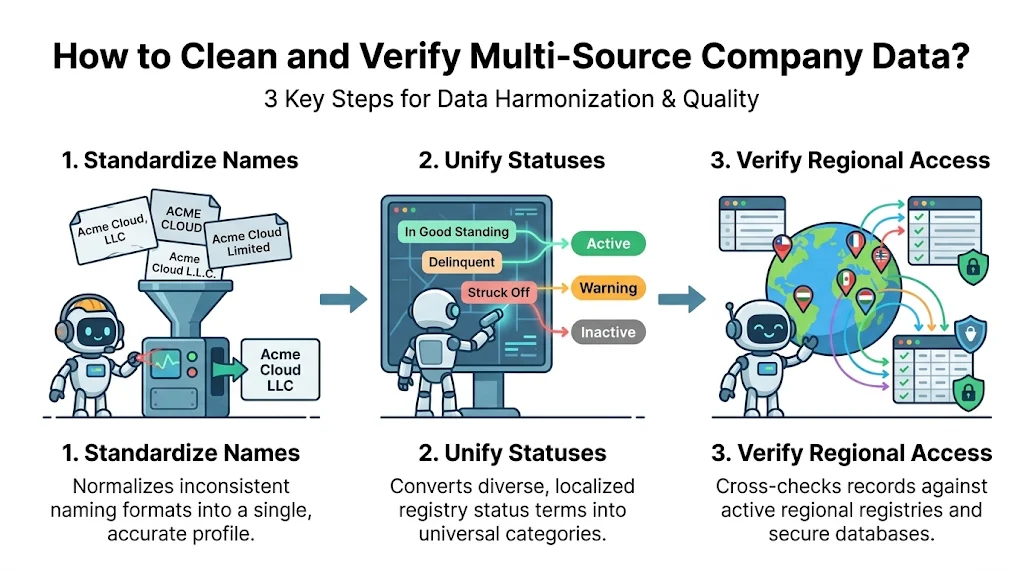
Switching from a single aggregator to multiple official registries or commercial feeds immediately improves freshness, yet it also creates a new problem: every jurisdiction formats business records differently. Before loading records from several states or countries into a CRM or compliance dashboard, three lightweight cleanup checks prevent duplicate entries and misread statuses.
Standardizing Legal Entity Names and Suffixes
The same company can appear as "Acme Cloud, LLC", "ACME CLOUD L.L.C.", or "Acme Cloud Limited" across different state and international filings. Matching records by exact text alone often splits one business into separate rows.
Before comparing names, normalize punctuation, capitalization, and common legal suffixes—such as mapping entity endings according to the ISO 20275 standard maintained by GLEIF—and pair the cleaned name with a unique registration number or jurisdiction code whenever available.
Mapping Different Registry Statuses into One Rule
Every registry uses its own legal vocabulary to describe whether a business is operating normally:
- Active / In Good Standing: The company is registered and up to date on annual filings.
- Delinquent / Pending: A tax or annual report is overdue, signaling a compliance warning.
- Dissolved / Struck Off: The entity is closed or removed from the register.
Translating local status labels into three standardized flags—Active, Warning, and Inactive—allows risk and sales teams to filter records consistently across regions.
Checking Regional Registry Access and Local Mirrors
Some national and regional business portals restrict lookup access or serve captcha challenges when requests arrive from outside their home country or repeat rapidly from a single server IP. Running lightweight test queries through Python scraping scripts paired with region-matched connections helps confirm that local search pages load completely without missing fields.
How to Collect Public Registry Data Reliably with IPFLY?
When your team builds an in-house pipeline to gather public business records across multiple U.S. states or international registries, connection quality directly determines data completeness. Sending thousands of automated lookup requests from a single data-center IP often triggers rate limits, empty search results, or regional access blocks on government portals.
Two Core IPFLY Proxy Options for Business Data Collection
To keep multi-region lookups stable and location-accurate, IPFLY offers two main residential-grade proxy lines tailored to different collection patterns:
- IPFLY Residential Proxies: These route your requests through a global pool of real residential IP addresses with country- and city-level targeting. You can rotate to a fresh IP per request or hold one IP for a short sticky-session window, and usage is billed strictly by traffic volume.
- IPFLY ISP Proxies: These provide dedicated, non-rotating IP addresses hosted on real Internet Service Provider (ISP) infrastructure. Each IP stays fixed over your chosen billing duration (priced per IP and time period), offering consistent session continuity.
How to Choose the Right Setup for Your Data Pipeline
Selecting between these two options comes down to choosing scraping proxies that match how often your pipeline switches portals and whether it requires a persistent session:
- Pick Rotating Residential Proxies when polling dozens of state or national business registries at once, verifying localized search results across multiple countries, or testing initial batches where pay-per-traffic pricing keeps costs predictable.
- Pick Static ISP Proxies when monitoring a fixed set of regional portals over extended periods or maintaining steady, authenticated access to an authorized data dashboard without frequent IP changes.
Keeping Registry Collection Compliant and Respectful
Both HTTP(S) and SOCKS5 endpoints plug directly into standard data scraping workflows in a few lines of configuration. Keep in mind that proxies improve regional reach and connection stability rather than bypassing restricted access: sticky sessions remain active for a set window rather than permanently, and responsible pipelines always pair proxy routing with polite request delays, clear User-Agent headers, and adherence to each registry’s robots.txt rules and terms of service.
Frequently Asked Questions About OpenCorporates Alternatives
Is there a completely free alternative to OpenCorporates?
Yes—official government portals like UK Companies House and U.S. SEC EDGAR offer free web searches and open APIs, though you must query each jurisdiction separately.
Why do teams combine commercial APIs with custom web scraping?
Commercial APIs deliver standardized global fields quickly, while custom scraping fills in fresh state-level filings and lowers high-volume lookup costs.
Is it legal to scrape public business registry websites?
Collecting publicly listed company names, registration numbers, and active statuses is generally legal when you follow robots.txt rules, request limits, and portal terms of service.
Which countries offer the easiest open company registry access?
The United Kingdom, the United States (for public SEC filers and several open-data states), and several European Union registries provide well-structured public lookup interfaces.
How often should company registry records be refreshed?
Compliance and KYB teams usually re-verify active entity status weekly or monthly, while B2B sales lists typically stay accurate with quarterly refreshes.
Conclusion
Finding the right OpenCorporates alternative comes down to matching your budget and coverage needs with the right mix of free official portals, commercial APIs, and targeted public registry extraction. Standardizing legal entity names and status labels keeps multi-source records clean, while routing automated lookups through IPFLY residential proxies helps maintain steady, location-accurate access across regional business portals.